How .nl became the domain for the Netherlands
40 years of .nl: from a lucky find to a strong and secure link
40 years of .nl: from a lucky find to a strong and secure link
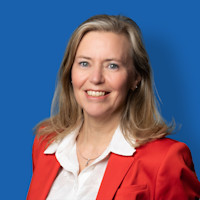
You come across the .nl domain every day. When you log in to the Tax Service website, make an appointment with your GP online, or order takeaway food from a delivery service... .nl is always there. It’s now hard to imagine a time without .nl websites. Yet, back in 1986, pioneer Piet Beertema had no idea that .nl would become what it is today: a strong, secure and stable domain for the Netherlands. CEO Roelof Meijer and CTO Loek Bakker talk about 40 years of .nl. From the early days and creation of the digital infrastructure to the people, organisations and systems behind the domain’s success.
Let’s go back in time 40 years. In 1986, 10 years before SIDN came into being, a system administrator at the National Research Institute for Mathematics and Computer Science (CWI) asked for permission to create the .nl domain. His name was Piet Beertema, and his request led to the delegation of .nl to the CWI on 25 April 1986. Shortly afterwards, cwi.nl was registered, and the Dutch national domain became the first active country-code domain outside the US.
In the early years, .nl and the internet were very different from what we know today. The internet was used mainly by researchers for sending data from one computer to another. And Piet Beertema certainly wasn’t thinking of websites when he asked to set up .nl. He was motivated by the realisation that the Netherlands was going to need its own region of the rapidly growing, international computer network. The DNS was the solution to the expansion of connections to EUnet: an international network of systems to which computers all around the world were connected. It was a technically important and strategically astute move. “Back then, no one envisaged .nl being vital for the Netherlands,” says Roelof. “It wasn’t until some years later that the domain took on its wider economic and societal role, after the World Wide Web (www) was set up in 1989.”

It wasn’t by chance that the Netherlands was at the forefront of developments in the 1980s and 90s. “In that period, the foundations of the internet infrastructure were being laid here,” Roelof continues. “And .nl benefitted from that.” Progress was initially driven mainly by Dutch internet pioneers and technicians. For example, they got systems communicating with one another, worked on protocols to make the internet more reliable, and organised the registration of .nl domain names. Following the creation of SIDN in 1996, the registration and management of .nl domain names became faster and more professional.
The enterprising spirit of the Dutch also contributed. “The Netherlands has always been very internationally oriented and Dutch people are used to working abroad,” says Loek. “That mindset was reflected in digital developments.” By way of example, he cites Amsterdam’s AMS-IX platform, created in 1994 and still one of the world’s biggest internet hubs today. “Being a small, flat and densely populated country helped as well,” adds Roelof. “In a country like ours, it’s easier to lay internet cables and achieve national coverage than it is in, say, France. So the threshold to businesses and households getting online was relatively low. And that in turn generated demand for .nl domain names and other internet services.”
Growth of the .nl domain received a further boost when a model based on registrars – businesses through which .nl domain names can be registered – was introduced in about 2000. “Many registrarships were run by young entrepreneurs,” Loek points out. “In some cases, they were just high school kids. As the registrar community expanded, registrars soon started trying to compete on price and by offering other services, such as business e-mail and hosting. As a result, it steadily became easier and cheaper for a person or business to get online with their own .nl domain name.”
The number of registrars ultimately peaked at more than 2000. Today, SIDN works with just over 1,000 registrars who provide fast and secure .nl domain registration and hosting services. “They’ve made a major contribution to the success of .nl,” asserts Roelof. “As have the registrants who make active use of their .nl domain names, and SIDN’s dedicated team who constantly strive to make .nl stronger.”
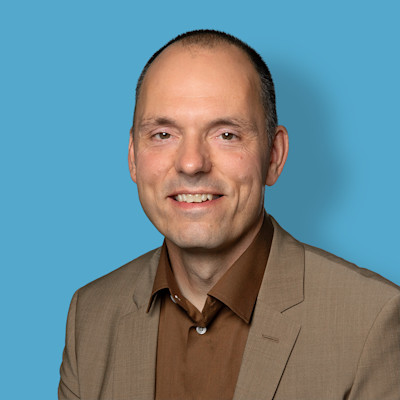
In the 40 years since its creation, .nl has become the internet domain for Dutch businesses and for Dutch society. From radio and TV ads to slogans on the backs of vans: you see and hear .nl everywhere. Roelof: “The work we do for the .nl domain here at SIDN affects the whole of society. That can be difficult to explain at a congress or at a social gathering, but it makes me proud every day.”
Loek adds: “Every one of the 100 people who make up our team takes the responsibility of providing the Netherlands with a secure and stable .nl very seriously. We’re the only organisation in the country that has that responsibility. That creates and element of pressure, but it also keeps us on our toes. With the result that .nl is always available, and is one of the world’s strongest, most secure and most advanced country-code domains.”
It’s hard enough to predict .nl’s future for the next 5 years, let alone the next 40 years. However, the role that domain names play will undoubtedly change. “For example,” says Loek, “the Domain Name System (DNS) was developed for a digital landscape that was very different from what we have today. Yet it remains a strong and robust technology of huge economic and societal value.”
Ands that’s down to more than technology alone. The security and stability of the DNS and other systems that support .nl and the internet infrastructure are based on collaboration amongst organisations and experts around the world within bodies such as CENTR, ICANN, IETF, DNS-OARC and RIPE NCC, to which SIDN belongs. In an era of cyberthreats, war and geopolitical upheaval, such collaboration is anything but automatic. “It’s those global connections that keep the systems and infrastructure behind .nl strong. And that makes us confident about the future,” says Roelof.
Want to know more about .nl? View the key milestones https://www.sidn.nl/en/40-years-nl, or watch the video about the use of the .nl zone https://stats.sidnlabs.nl/nl/.